Home Battery Backup Systems in Westfield, IN | Dylco Electric
When the power goes out in Westfield, a home battery backup system keeps your lights, fridge, furnace, and internet running — instantly, silently, and without a drop of fuel. Dylco Electric designs and installs Tesla Powerwall, Enphase, and Generac PWRcell battery systems for Central Indiana homes. Licensed, insured, and trusted since 2004.
A home battery backup system stores electricity in a wall-mounted battery and switches your house over automatically the second the grid drops — no noise, no fumes, no waiting for a generator to crank. Dylco Electric sizes, permits, installs, and commissions Tesla Powerwall, Enphase IQ Battery, and Generac PWRcell systems for Westfield, IN homes, with or without solar. Most homeowners get 8–24 hours of backup on essential circuits per battery, and you can add more batteries for longer runtime. Licensed, insured, and rated 4.9 stars on Google — call 317-896-1328 or request a free quote below.
What Is a Home Battery Backup System and How It Works
A home battery backup system is a rechargeable battery — plus an inverter and an automatic transfer device — installed at your home's electrical service. It charges from the grid (or from solar, if you have it) while the power is on, then disconnects your house from the grid and powers your circuits from stored energy the moment an outage hits. The switchover happens in milliseconds, so in most homes the only thing you notice is that the microwave clock didn't blink.
Unlike a portable battery backup power supply for home use, which you plug a few things into, a whole-home system is wired directly into your electrical panel. You decide up front which circuits stay live: some homeowners back up only the essentials — furnace, sump pump, refrigerator, Wi-Fi, a few outlets and lights — while others back up the entire house. Dylco walks you through that decision during the free assessment, because it drives both the size of the system and the price.
- Charges from the grid or from solar, and stays topped off automatically
- Switches over in milliseconds — no start-up delay, no manual transfer
- Runs silently indoors or in the garage, with no exhaust and no fuel
- Backs up either critical circuits or the whole home, your choice
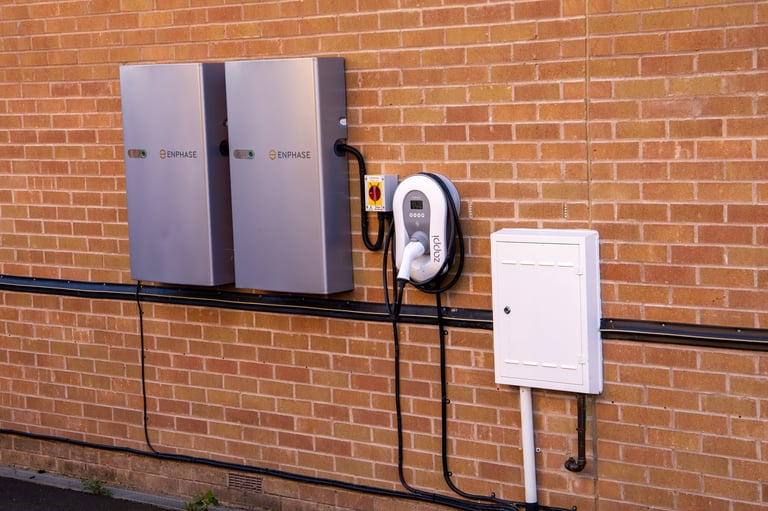
Batteries mount on a wall and pair with grid or solar charging — and with EV chargers, so your car and your home both stay powered.
Battery Backup vs. Standby Generator: Which Is Better?
This is the question we get most often, and the honest answer is that they solve different problems. A battery is quiet, instant, and maintenance-light but limited by how much energy it stores. A standby generator runs as long as the gas keeps flowing but is louder, needs annual service, and takes a few seconds to start. Some Westfield homeowners install both — the battery covers the frequent 20-minute blips silently, and the generator handles the rare multi-day storm outage.
| Home Battery Backup | Standby Generator (e.g. Generac) | |
|---|---|---|
| Runtime | Hours to overnight per battery; add batteries or recharge from solar to extend | Days to weeks, as long as natural gas or propane holds out |
| Switchover speed | Instant — milliseconds | A few seconds to start and transfer |
| Noise | Nearly silent | Roughly 65–90 dB while running |
| Fuel | None — recharges from grid or solar | Natural gas, propane, or diesel |
| Maintenance | Minimal — inspections and firmware updates | Oil, filters, and exercise runs, typically a few hundred dollars a year |
| Placement | Wall-mounted in a garage or utility space, or outdoors | Outdoor pad with required clearances |
| Typical installed cost | Generally higher per unit of backup | Generally lower for whole-home coverage |
| Best for | Frequent short outages, quiet operation, solar pairing, homes without gas service | Long outages, heavy loads like central AC and well pumps |
Dylco installs both, so the recommendation you get is based on your home and your outage history — not on what we happen to stock. If a backup battery generator setup (a battery paired with a standby unit) makes more sense for your house, we'll tell you that too. See our Generac generator installation page for the generator side.
How Battery Backup Power Helps Westfield, IN Homeowners
Westfield sits in the heart of Indiana's storm belt, and Duke Energy Indiana customers across Hamilton County see their share of summer thunderstorm outages, winter ice events, and short grid blips that reset every clock in the house. For most families, the pain isn't the rare multi-day outage — it's the sump pump going quiet during a downpour, the chest freezer thawing out, the home office going dark in the middle of a call, or a medical device losing power with no warning.
Backup power for home use solves all of that, and a battery does it without waking the neighborhood. Newer Westfield subdivisions are also being built with heavy electrical loads — EV chargers, heat pumps, smart panels, home offices — which makes stored backup power more valuable than it was a decade ago. Because a battery installs indoors or in the garage and makes no noise, it also works in neighborhoods with HOA restrictions that make an outdoor generator pad a headache.
Keeps the sump pump running during the storms that cause the outage
Protects refrigerated food, medical equipment, and home-office uptime
Silent operation — no HOA complaints, no generator pad, no fuel deliveries
Pairs with a smart electrical panel so you can control which circuits run and for how long
Ready for solar now or later, if you ever add panels
A battery and a smart electrical panel pair naturally — the panel tells a battery exactly which circuits to keep powered and for how long.
Our Home Battery Backup Installation Process, Step by Step
Battery backup is a design job before it's an installation job. Sizing it wrong is the single most common mistake we're called in to fix. Here's how Dylco handles it:
Free In-Home Load & Backup Assessment
We look at your panel, your actual energy use, and what you want to keep running — then tell you honestly how many hours of backup that translates to. No guessing, no oversized quote.
System Design, Sizing & Battery Selection
We match the battery, inverter, and backup configuration to your home and budget, and show you the trade-off between essential-circuit backup and whole-home backup before you commit.
Permitting & Utility Interconnection
Dylco pulls the electrical permit, prepares any interconnection paperwork your utility requires, and confirms the design meets Indiana code for energy storage systems — including required clearances and disconnects.
Battery, Inverter & Backup Panel Installation
Our licensed electricians mount the battery, wire the inverter and automatic transfer equipment, and install a backup subpanel if your design calls for one. Most single-battery installs finish in one to two days.
5. Commissioning, App Setup & Walkthrough
We test the system under a real simulated outage, set up the monitoring app on your phone, and walk you through exactly what will and won't stay on before we leave.
Batteries We Install: Powerwall, Enphase & Generac PWRcell
Dylco is brand-flexible on purpose. Each of these systems is a strong choice for a different kind of Westfield home, and the free assessment is where we figure out which one fits yours.
Tesla Powerwall
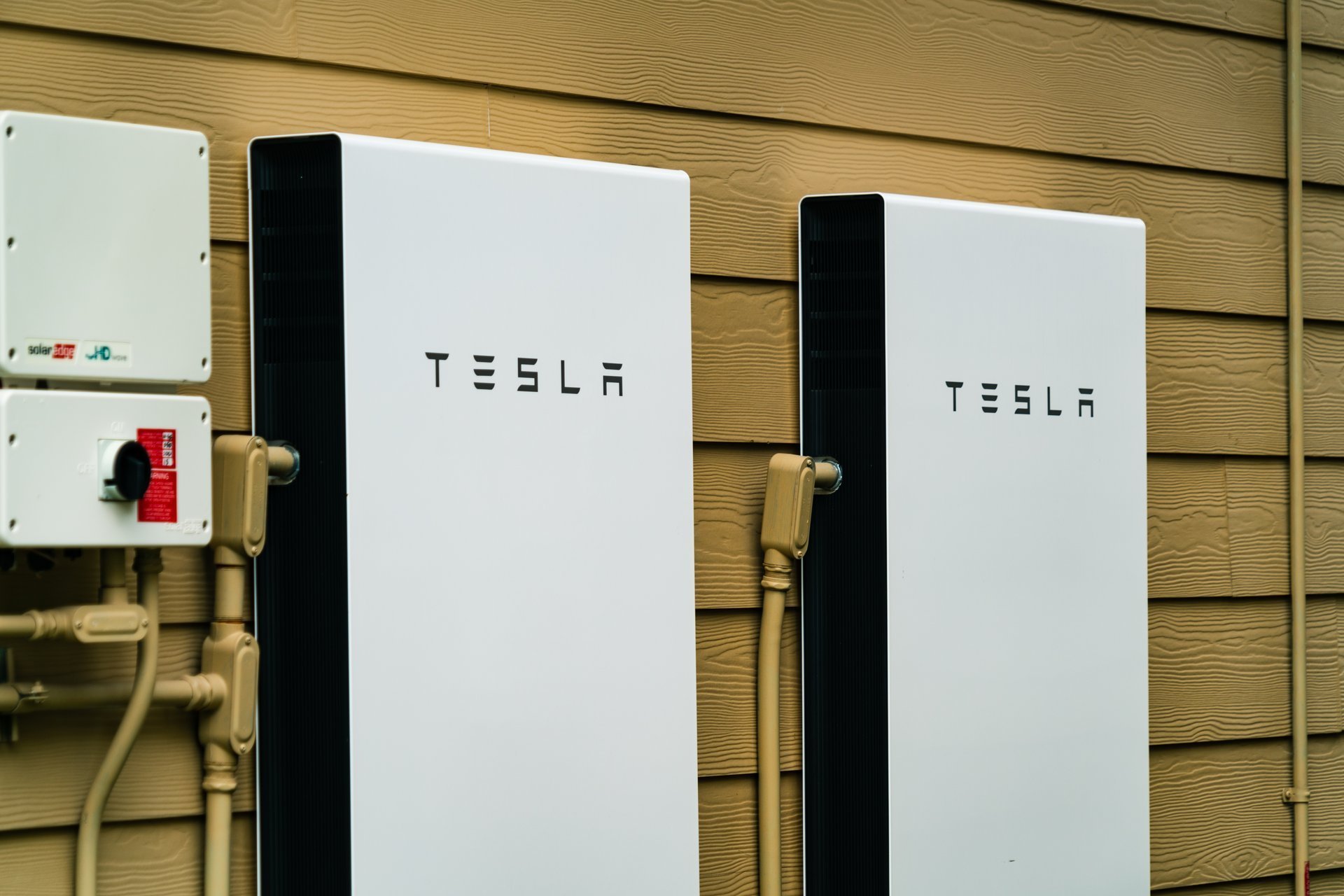
High storage capacity per unit with a well-regarded app, strong whole-home backup performance, and simple stacking when you want more runtime. A popular pick for larger homes and for homeowners who want one clean, integrated system.
Enphase IQ Battery
Modular design that lets you start smaller and add capacity later, with per-module electronics for redundancy. Well suited to homes that already have Enphase solar or expect to add panels down the road.
Generac PWRcell
Scalable capacity from the same brand behind most whole-home standby generators in Central Indiana — a natural fit for homeowners who already own a Generac unit or want a battery-plus-generator setup from one manufacturer.
Why Choose Dylco Electric for Battery Backup in Westfield
Dylco Electric has wired, upgraded, and troubleshot homes across Central Indiana since 2004, and battery backup sits alongside our generator, smart panel, and EV charger work — not tacked onto a solar sales pitch. We're electricians first, which matters here: most battery installs also touch your service panel, and a lot of homes need a panel upgrade before a battery makes sense. We can do all of it, in-house, on one permit.
Licensed, Bonded & Insured
Indiana electrical contractor since 2004 — we pull every permit on every job
4.9★ on Google
20+ years serving Westfield and Central Indiana, with 6 industry awards
Unbiased Recommendation
We install batteries AND Generac generators, so the advice is based on your home
One Crew, One Permit
Panel upgrades, smart panels, and EV chargers handled by the same team, on the same visit
Up-Front Pricing
No surprise fees — a firm written quote before we start
Same-Day Response
We move fast when your electrical situation can't wait
Home Battery Backup Systems FAQs for Westfield, IN
How long will a home battery backup system last during an outage?
How much does a battery backup system cost in Westfield, IN?
Do I need solar panels to install a home battery?
Is a battery backup better than a backup battery generator or standby generator?
Can a home battery power my whole house or only some circuits?
Do I need a permit to install a battery backup system in Westfield?
Is there still a federal tax credit for home battery storage in 2026?
Where does the battery get installed in my home?
How long does battery backup installation take?
Adding a Level 2 EV charger or Generac standby generator? Your panel's capacity and your outage pattern are the first things we check — request a free assessment below.
Get Your Free Home Battery Backup Quote in Westfield
Tired of the lights going out every time a storm rolls through Hamilton County? Dylco Electric will size the right battery backup system for your Westfield home and give you a straight answer on runtime and cost — free, in person, with no pressure.
Free quote · Same-day response when possible · Licensed & insured · 4.9 ★ on Google