
Electric vehicles are becoming an increasingly practical choice for homeowners who want convenient, efficient transportation without relying on traditional gasoline. One of the biggest advantages of owning an EV is being able to charge it at home. However, choosing the right home charger is not as simple as purchasing the first charging unit you find.
The right EV charger depends on your vehicle, charging speed requirements, electrical panel capacity, daily driving habits, available installation space, and the electrical infrastructure of your home.
For many homeowners, a Level 2 charger provides a practical balance between charging speed and convenience. However, not every home is immediately equipped to support one. An electrical inspection may be necessary before installation, particularly in older properties. Understanding the different charger levels and the electrical requirements involved can help you make a more informed decision.

Start Here
What Are the Main Types of EV Chargers?
Home EV charging generally falls into two main categories: Level 1 and Level 2 charging. DC fast charging is another category, but it is generally designed for commercial or public charging environments rather than typical residential installations.
Level 1 EV Chargers
Level 1 charging uses a standard household electrical outlet. It is usually the simplest charging option because it does not require the installation of a dedicated higher-voltage charging circuit. The main disadvantage is charging speed.
Level 1 charging can be suitable for drivers with short daily commutes or people who leave their vehicle parked for long periods. Dylco Electric can help homeowners understand whether Level 1 charging meets their driving needs and whether a higher-level charging solution may be more appropriate for drivers who travel significant distances every day. For some households, the convenience of simply plugging into an existing outlet may outweigh the slower charging rate.
Level 2 EV Chargers
Level 2 chargers operate at a higher voltage and generally require a dedicated electrical circuit. They can charge an EV significantly faster than Level 1 equipment, making them a popular choice for homeowners. A Level 2 charger can be particularly useful for households where an EV is driven frequently and needs to be recharged overnight.
However, installing a Level 2 charger is more involved than plugging in a Level 1 charger. The home's electrical panel, wiring, circuit capacity, and installation location all need to be evaluated.
| Level 1 | Level 2 | |
|---|---|---|
| Power Source | Standard 120V household outlet | Dedicated 208–240V circuit |
| Charging Speed | Slow — adds a few miles of range per hour | Fast — suitable for overnight full charges |
| Installation | None — plug into an existing outlet | Professional install and dedicated circuit |
| Best For | Short commutes, low daily mileage | Frequent driving, daily charging needs |
| Panel Impact | Minimal | Requires capacity assessment |
Why Electrical Capacity Matters for EV Chargers
One of the most important considerations is whether your home's electrical system can safely support the charger. A Level 2 charger can place a significant continuous load on an electrical system.
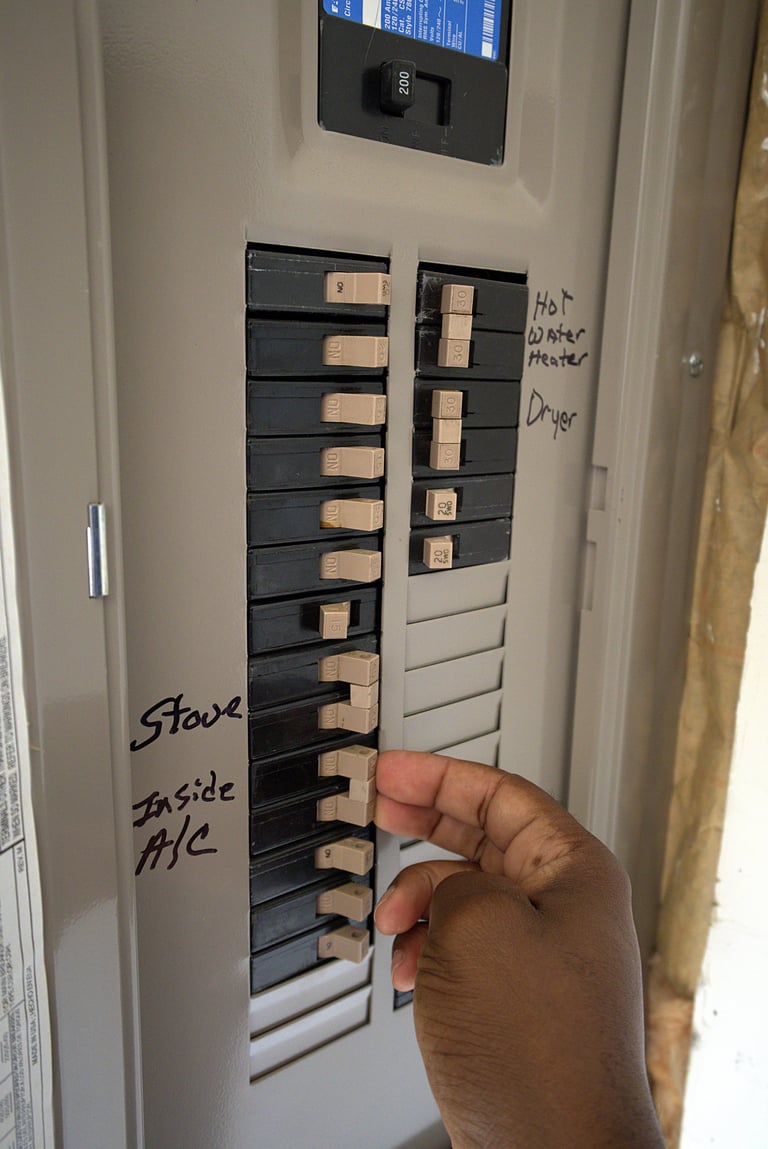
If your home already has high-demand appliances such as electric heating, an electric water heater, an electric dryer, an induction range, or an air-conditioning system, the existing electrical panel may have limited capacity. An electrician can evaluate the home's service capacity and determine whether the desired charger can be installed safely. This is especially important for older homes.
Do You Need an Electrical Panel Upgrade?
Not every EV charger installation requires an electrical panel upgrade. However, an older or undersized panel may not have enough capacity or available space for a new dedicated EV charging circuit.
If an upgrade is required, an electrical panel upgrade service can help increase electrical capacity and modernize the home's distribution system. The evaluation should consider the home's existing electrical loads as well as future needs. Installing an EV charger can also be an opportunity to evaluate whether the home's electrical infrastructure is prepared for additional technologies.
What Is a Smart EV Charger?
Smart EV chargers provide features that go beyond basic charging. Depending on the model, smart charging equipment may allow homeowners to:
- Schedule charging during selected hours
- Monitor energy consumption
- Adjust charging settings
- Receive charging notifications
- Control charging through a mobile application
- Integrate with certain home energy systems
Smart charging can be useful for homeowners who want greater control over when and how their vehicle charges. Some systems can also coordinate charging with broader home energy management technologies.
Can a Smart Electrical Panel Help With EV Charging?
A smart electrical panel for home can provide more detailed information about household energy consumption and, depending on the system, help manage electrical loads. This can be particularly useful when a home has several high-demand electrical devices.
For example, if an EV charger, HVAC system, electric water heater, and other major appliances operate simultaneously, intelligent energy management may help prevent excessive demand. Smart electrical equipment does not eliminate the need for proper electrical design. The system still needs to be correctly sized and installed.
Note
A more powerful charger is not always a better charger.
Where Should You Install an EV Charger?
The location of the charger is another important consideration. Many homeowners install chargers inside garages because the vehicle is protected from weather and the charging equipment is conveniently accessible. However, outdoor installation can also be possible when the charger is designed and rated for outdoor use.
The ideal location should allow the charging cable to reach the vehicle without creating a tripping hazard or requiring excessive cable length. The installation area should also provide appropriate protection from physical damage and environmental conditions.
Should You Buy the Most Powerful EV Charger?
Not necessarily. A higher-powered charger is not automatically the best option. The vehicle's maximum charging capability, electrical service capacity, daily driving habits, and installation cost should all be considered.
A charger that is significantly more powerful than your EV can use may provide little practical benefit. Likewise, installing the highest-capacity charger available may require electrical upgrades that are unnecessary for your actual driving needs. The best approach is to select a charger that provides an appropriate balance between charging speed and the home's electrical capabilities.
What About Surge Protection?
EV charging equipment is connected to your home's electrical system, so homeowners may also want to consider electrical protection strategies. A whole home surge protector can provide protection against certain transient voltage events throughout the home's electrical system.
Surge protection is not a replacement for correct wiring, grounding, circuit protection, or professional charger installation. Instead, it can be part of a broader electrical protection strategy. A qualified electrician can help determine whether additional surge protection makes sense for your home.
Can an EV Charger Work With a Home Generator?
Homeowners who already have or are considering standby power may wonder whether their EV charger can operate during an outage. This depends on the generator's capacity, electrical configuration, charger requirements, and load-management system.
A generator designed for household backup power may not automatically have enough capacity to charge an EV while also powering heating, cooling, refrigeration, lighting, and other essential equipment. If you are considering generac Whole home generator installation, it is worth discussing your EV charging requirements at the same time. The generator and charger should be evaluated together rather than treated as completely independent electrical systems.
Can an EV Charger Provide Backup Power?
Some newer EVs and charging systems support bidirectional energy transfer, which can allow electricity to flow between the vehicle and a home under compatible conditions. This technology is often associated with vehicle-to-home or vehicle-to-grid applications.
However, not every EV or charger supports this feature. Homeowners interested in using their EV as backup power for home applications should verify that the vehicle, charger, inverter, transfer equipment, and electrical system are all compatible. This technology is developing quickly, so professional planning is important.
Curious whether your EV can provide backup power? Learn more about EV charging, home electrical systems, and emerging technologies that can help homeowners make informed decisions about their electrical setup. Explore more insights from Dylco Electric on our blog.
Final Thoughts
Choosing an EV charger for your home requires more than comparing charger prices and charging speeds. You need to consider your vehicle's charging capabilities, daily driving habits, parking arrangements, electrical panel capacity, wiring, and future energy needs.
For many homeowners, a Level 2 charger provides a convenient balance between charging speed and everyday usability. However, the right solution depends on the individual home and vehicle.
How to Choose: Four Steps
Assess Your Vehicle
Check your EV's maximum onboard charging rate. A charger more powerful than your vehicle can accept provides no practical benefit.
Evaluate Panel Capacity
An electrician reviews your service size, available breaker space, wiring, and existing household demand before anything is ordered.
Confirm the Circuit
Most Level 2 chargers need a dedicated 208- or 240-volt circuit with a breaker rated for continuous charging.
Plan the Location
Choose a spot where the cable reaches the vehicle without a trip hazard, with protection from weather and physical damage.
Keep Reading
How Does a Whole-Home Generator Work During a Power Outage?
Outage detection, automatic start, transfer switch, and restore — explained step by step.
Panel Upgrades6 Signs You Need an Electrical Panel Upgrade
Tripping breakers, dimming lights, a warm panel — how to tell when your panel has run out of room.
Electrical SafetyWhy Does My Space Heater Keep Tripping the Breaker?
The usual cause isn't a bad heater — it's a circuit that was never built to carry that load.